They’re back!
I sit at the Dragvoll University Campus in Trondheim watching the common seagulls fly around overhead. A week ago, around Easter time, these white guardians of the sea returned to their breeding sites, and the flat roofs of the campus buildings are excellent places for their nests. Their presence is a reminder of what the CoastARTS Norway project strives to celebrate: seabirds, the most visible ocean animals and powerful indicators of coastal change in the Anthropocene era.

The coast is a vital and vibrant part of Norway: when measured along the shores of all the fjords, inlets, islands and islets, Norway’s coastline stretches to an incredible 100,915 km,i more than two and half times our planet’s circumference! This long and varied coastline is in deep crisis, according to Tycho Anker-Nilssen from the Norwegian Institute for Nature Research (NINA). The rapid disappearance of seabirds is an early warning of significant ecological decline and can tell us much about the state of the environment at hand.
Seabirds forage over vast aquatic spaces and specialize in hunting prey that are impacted by rising temperatures. These birds are long-lived, slow-reproducing and philopatric, returning to the same breeding site for the duration of their lives. Approximately 25% of Europe’s seabird populations breed along the Norwegian coast. According to SEAbird POPulations (SEAPOP), a monitoring and mapping program run by NINA and the Norwegian Polar Institute (NPI), there were an estimated five and a half million seabird pairs living in this region in 2013. The last ten years has seen that number plummet by 27% to only four million pairs, reflecting a larger global trend. From 1950 to 2010, 70% of the world’s seabird populations disappeared. Their rapidly thinning numbers are a stark indicator of broader ecological disturbances.
The CoastARTS Norway project, which started in February 2025, explores human–avian relationships through the lense of creative practices. The first year was dedicated to research design and building networks for community-based events in three locations along the Atlantic West coast: Nesna, a small town 114 km south of the Arctic Circle; Herøy, an island just off Nesna; and Trondheim, Norway’s third largest city, about 335 km south of Nesna. So far workshops have been held in Nesna and Trondheim, with two more events scheduled for late April/early May in Nesna and Herøy.
The Trondheim workshops involved young people at two local schools and culminated in a Welcome Party for Common Seagulls on 20 March 2026 at the Steiner School yard near the Rotvoll shoreline. The workshops were rooted in the concept of the ‘patchy Anthropocene’, as introduced by Anna Lowenhaupt Tsing, Jennifer Deger, Alder Keleman Saxena and Feifei Zhou.ii Tsing and her colleagues argue that while the Anthropocene is defined as the epoch of ‘human-influenced environmental change’ on a planetary scale, it cannot be fully understood without considering the personal and local patches around us where human activities have altered ecologies in quite specific ways. Their book theorises case studies presented on the Feral Atlas website, which begins with the premise that ‘Every event in human history has been a more-than-human event’; all human-built infrastructures have had more-than-human consequences. The concept of ferality especially suits our thinking about seagulls: they are something between wild and domestic, interacting with humans, exploiting our refuse and living close by us as part of a new, mixed version of nature.
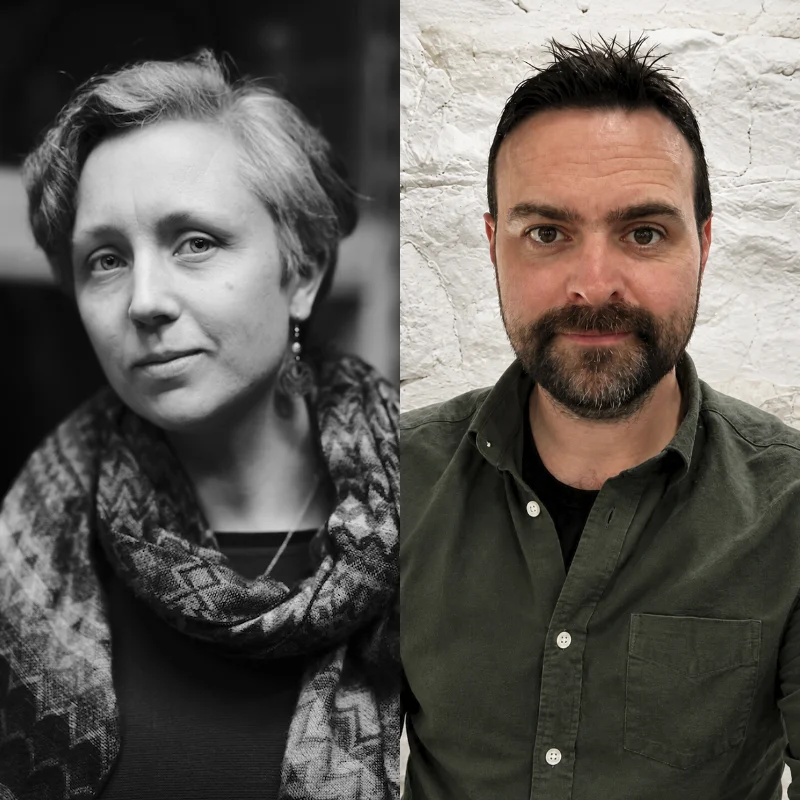
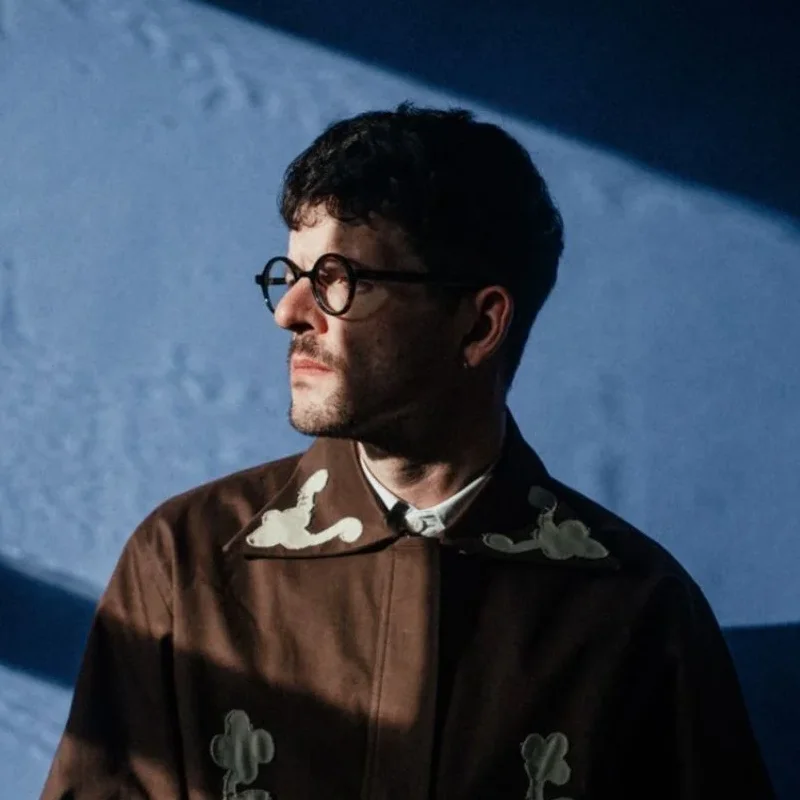
To explore how we can connect natural science, personal experiences and creative work, CoastARTS Norway engaged multimedia artist Mari Mäkiö from Helsinki (Finland) and puppet artist Annalise Best from Birmingham (UK) to work for one week with eighth grade students alongside bird specialist Audun Eriksen. Mäkiö started her workshop by asking young people to share stories of their everyday encounters with seagulls. A typical story read as follows:
One sunny day on Exmouth beach I was listening to the crash of the waves with a cardboard pot of chips next to me. I was eating them slowly, enjoying the salty crisp taste. Suddenly, out of nowhere, a great big greedy seagull swooped down and snatched the whole pot! It flew up and up until I could not see it or my chips anymore. 10-year-old me was devastated and begged my mom for new chips. Eventually she agreed and I enjoyed those ones in the car away from the big bad seagulls.
The other stories reiterated this attitude: seagulls are aggressive, annoying and noisy, and they eat your food if you are not protecting yourself. Then, Mäkiö asked the students to tell the story from the seagull’s perspective. The task of imagining the experience from another point of view evoked lively discussions about the birds’ living conditions, the choices they make and how they might use human language if they could speak it. Afterwards, I asked the young people what the exercise made them think. One wrote: ‘how humans mistreat seagulls, almost as if the humans are the villains and the seagulls are good’. Another responded: ‘how much humans disturb seagulls and how human activity and daily decisions have a big impact on the seagulls’. A third pupil noted how similar seagulls and humans are in that we both protect and eat. The switch in perspective allowed many of the participants to consider seagulls as sentient individuals just fighting for survival.

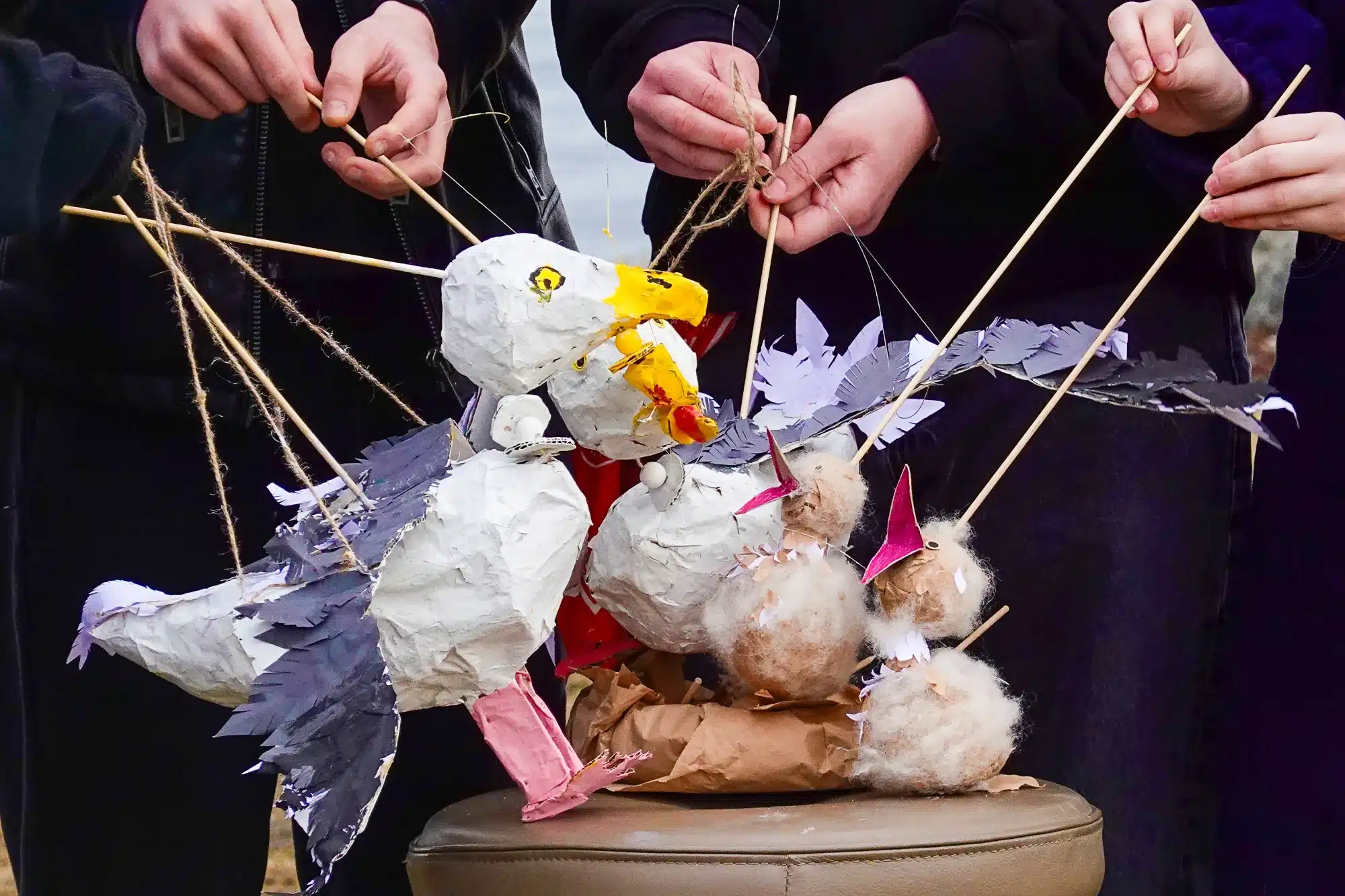
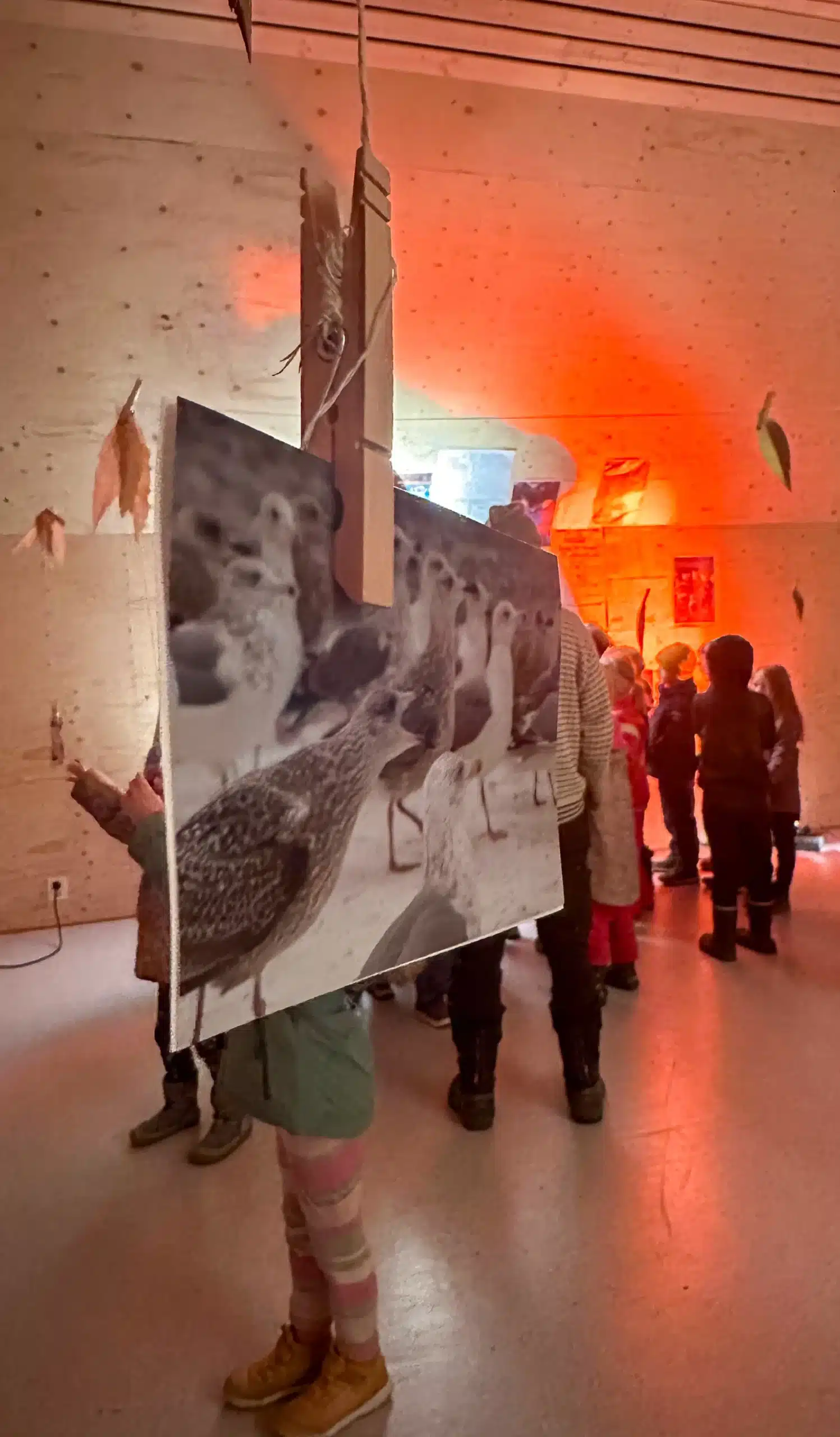
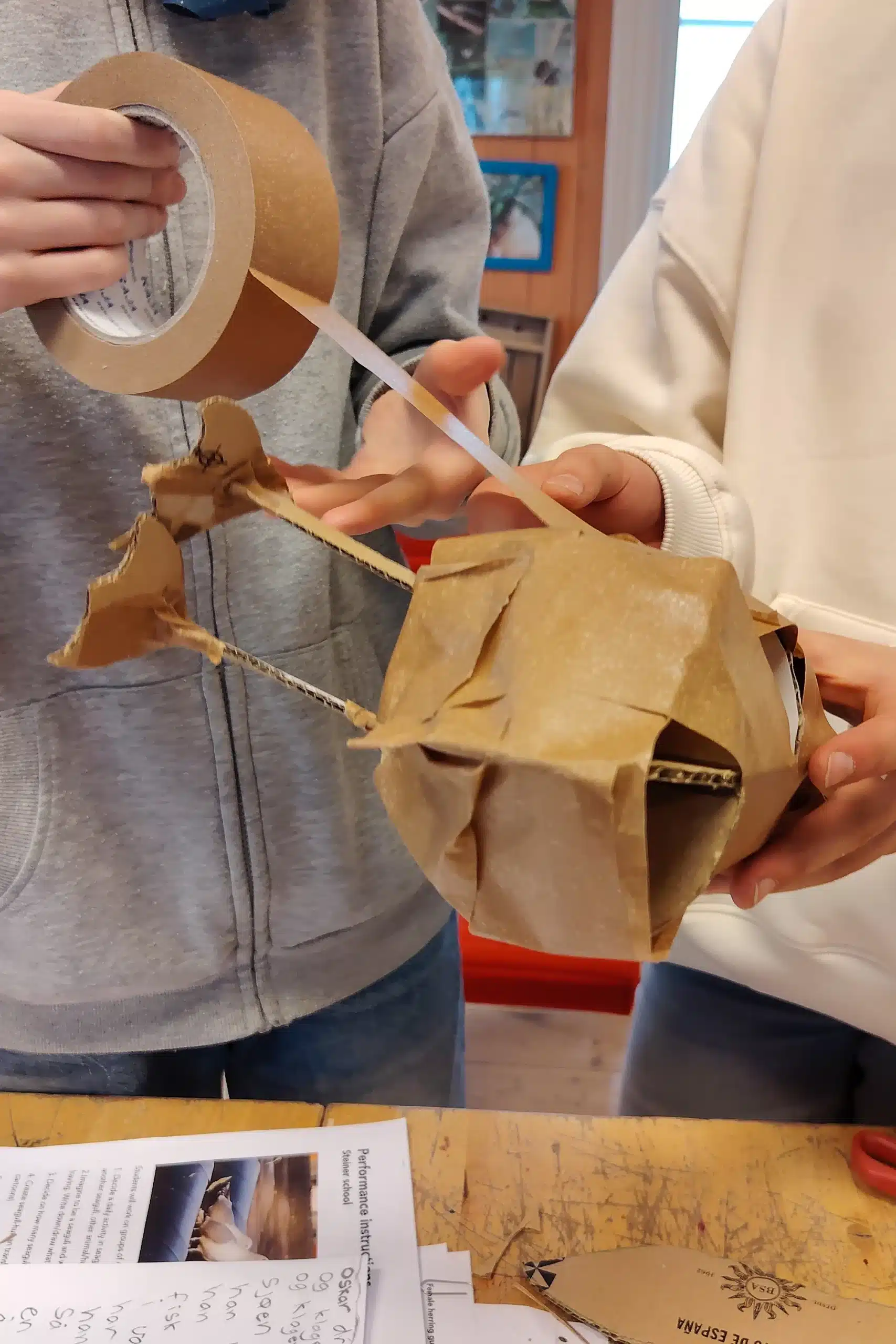
Then the young people created seagull puppets in small groups, designed as a combination of a stick puppet and marionette. The birds needed to be animated by two co-operating puppeteers and at the end of the week the workshop participants performed human–seagull encounters at the Seagull Welcoming Party from both their own and the seagulls’ perspectives. From this, a beautiful gesture emerged. Rather than taking measures to prevent seagull nesting as kindergartens and schools in Trondheim usually do, the blacksmith from Steiner School built a platform away from the damp guttering so that seagulls can safely nest there this year. This small, community driven intervention illustrates how artistic projects can generate real world solutions. The workshop sparked an article in the local newspaper Adressavisen, with the headline ‘Turning the tide on gull hatred in Trondheim’.

CoastARTS Norway does not stop at artistic output: it asks what concrete actions we can take for seabirds. Inspired by the global Climate Change Theatre Action initiative, we strive to link performances to ecological, social or political change. The workshop programme also shows the patchiness of the Anthropocene, adding new patches to our understanding of the changing environments in which we live.

Notes
i Recalculated in 2011: https://www.lifeinnorway.net/norway-coast/
ii Tsing, Anna Lowenhaupt, Jennifer Deger, Alder Keleman Saxena & Feifei Zhou (2024) Field Guide to the Patchy Anthropocene: The New Nature, Stanford University Press.