I have been very lucky to maintain a close connection with my former MA supervisor, Heli Aaltonen from the Department of Art and Media Studies. One day, after feeding nearly 400 seagulls together at Nedre Leirfossen, we decided that the cultural kindergarten where I work should join the CoastARTS Norway team as one of its community partners. To launch this collaboration, we planned an entire week of activities so that the group ‘Paletten’ (ages 3–6) could experience a wide spectrum of the seagull world. These activities were designed to awaken the children’s sensory world through movement, sound, colour, storytelling and creative experiment. The aim was not only to build knowledge about seabirds, but also to foster empathy, curiosity and a deeper connection with the natural environment, while exploring artistic possibilities rooted in both the coastal landscape and the children’s everyday lives. Today, the kindergarten continues this exploration through a project called ‘If I Were a Bird’, inspired by CoastARTS.
Our starting point was Axel Thorenfeldt’s illustrated Norwegian coastal bird book Kystfugler (2024). Thorenfeldt’s aquarelles bring different coastal bird species vividly to life, tracing the unique traits, migrations, nesting and feeding habits that connect them to coastal culture. Another important inspiration was the picture book Lost and Found by Oliver Jeffers. In the story, a boy finds a penguin at his door and assumes it must be lost. He sets out on a journey to return it home, only to realise that perhaps the penguin was not looking for a place, but for companionship. Searching for belonging and connection became an important thread in our own storytelling as the various activities unfolded. The project culminated in a three-dimensional display case installation with sound, developed in collaboration with master’s student Annamária Zemková from KiT (the Art Academy in Trondheim).
The week
Monday
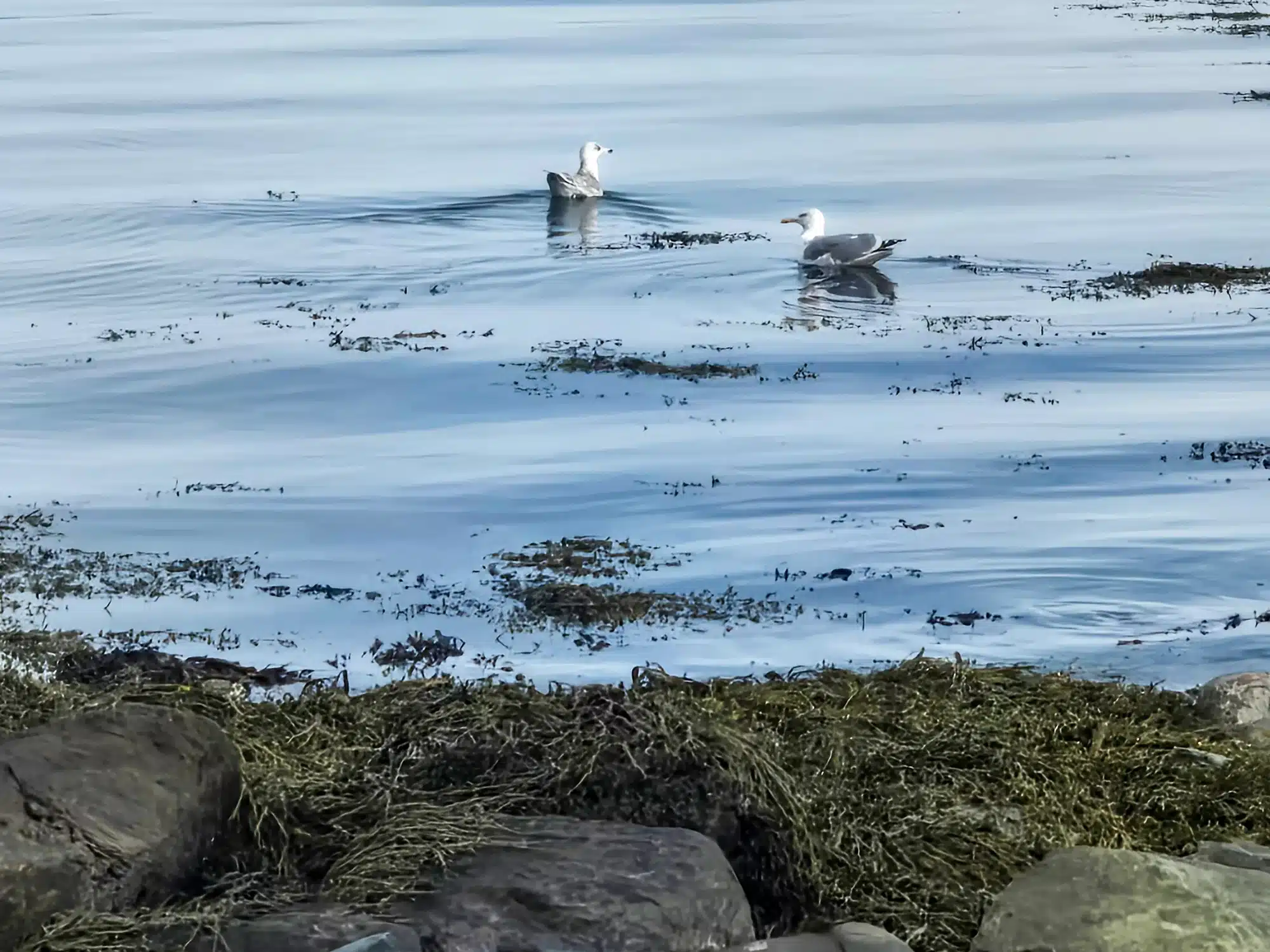
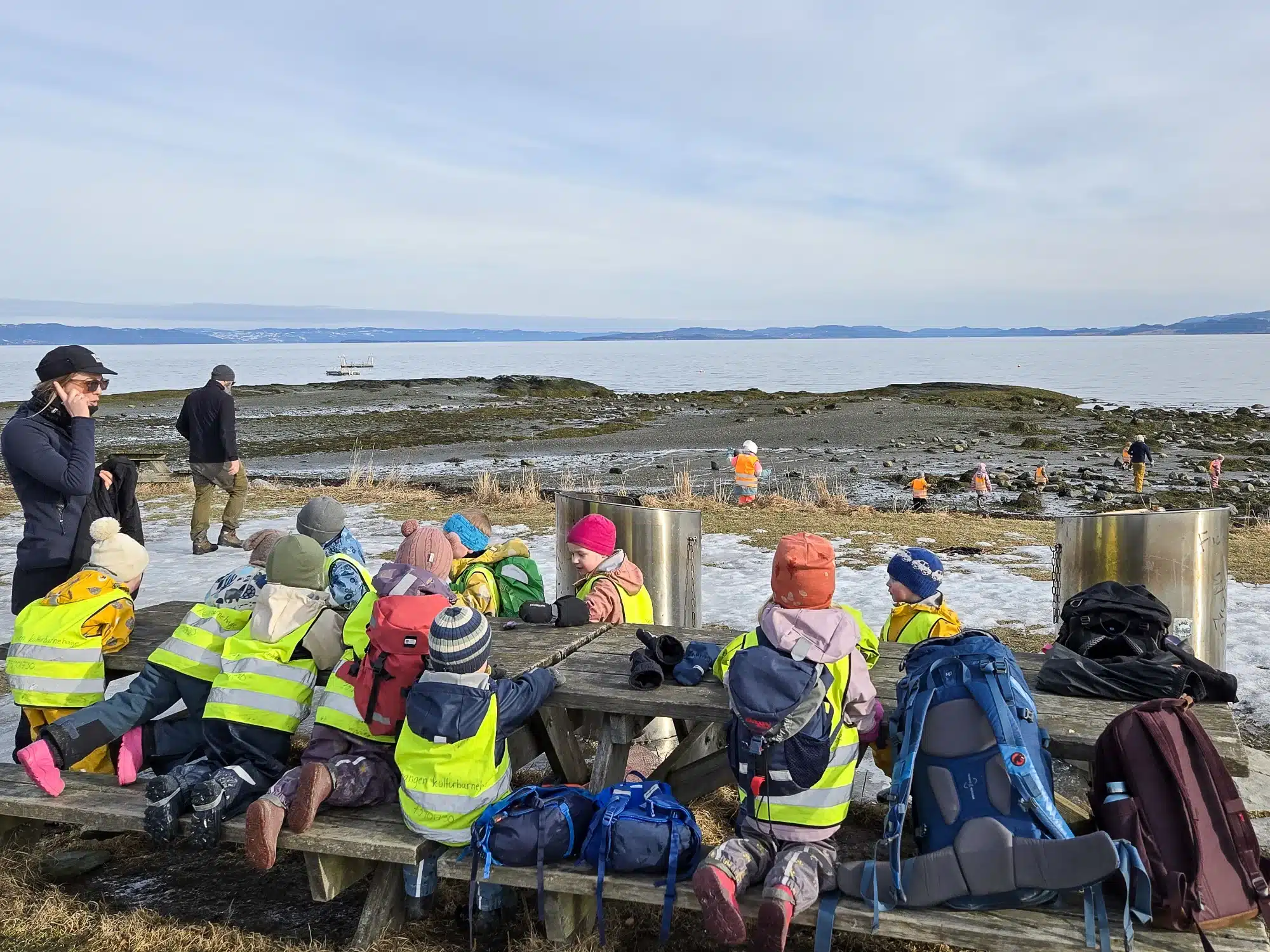
Staff led Yellow (3-year-olds) and Orange (4-year-olds) groups on a 45-minute walk to Rotvoll shoreline in Trondheim. We brought some dog food to attract the birds. While many crows confidently claimed the food, the seagulls were more cautious. We listened, observed and collected seaweed, shells and even bits of trash. During this gentle and sensory introduction to the life of coastal birds, we noticed, on the shoreline at low tide, the black-headed gull that later became the main character of the project.

Tuesday
We stayed at the kindergarten and the Red group (5-year-olds) joined in. I retold Lost and Found, creating a new version inspired by our own experiences at Rotvoll. In this story, a boy and a black-headed gull travel along the shore, meeting different gull species along the way – a herring gull, a common gull, a great black-backed gull and a lesser black-backed gull – all helping them search for the lost bird’s family.
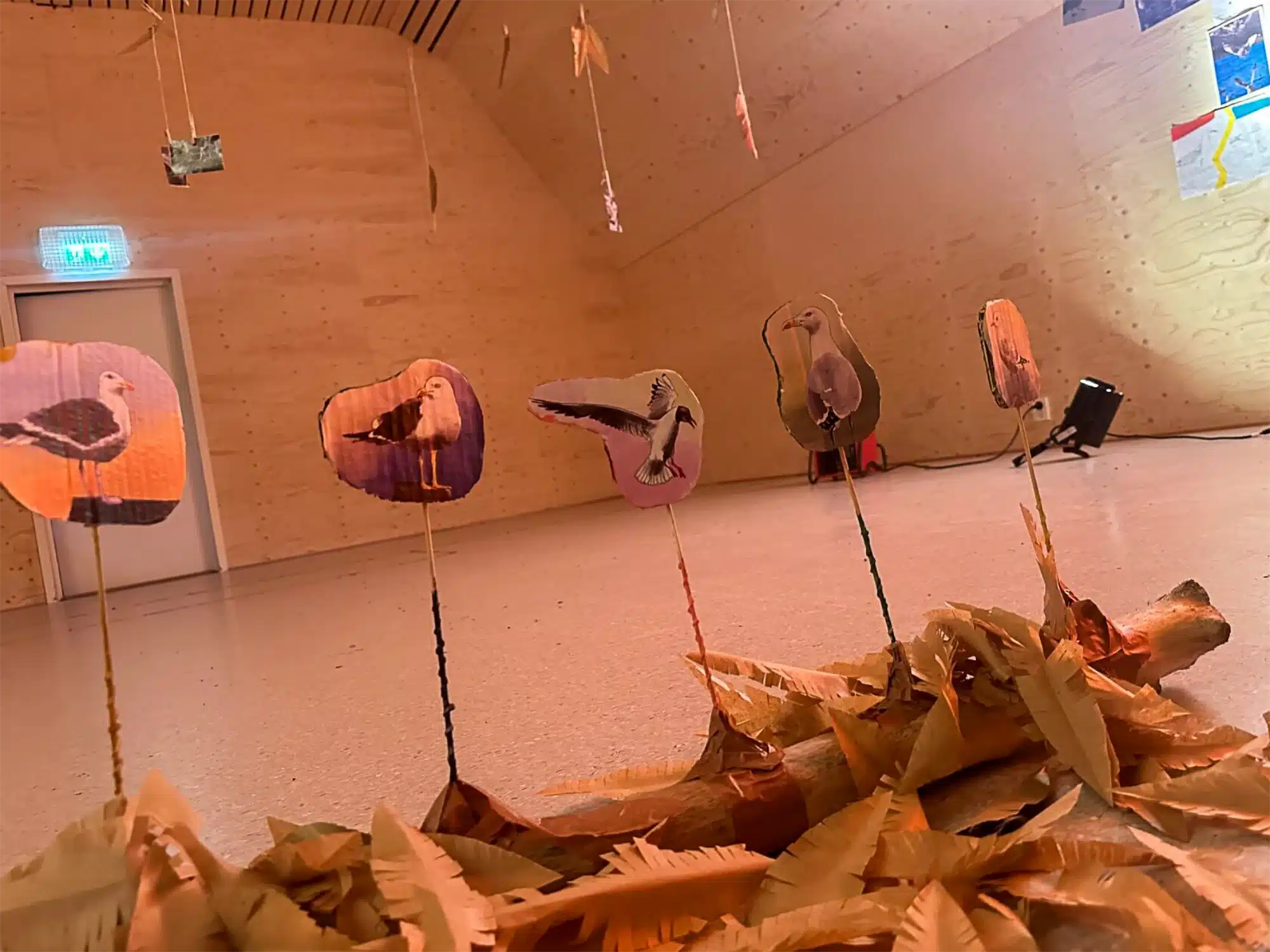
The storytelling sessions were held separately for each group, using a simple but effective setup: a blue velvet cloth, books and small paper puppets of the different gulls, created by Annamária Zemková. These moments felt intimate and imaginative, allowing the children to enter the story world together. I played different seagull sounds from the website fuglelyder.net and also showed the beautiful drawings from Thorenfeld’s book. Then we began painting the outer structure of the installation.

Wednesday
We built a large nest using twigs, leaves, grass, moss (both dried and fresh) and other natural materials found in the garden. The nest became a central element of the installation. We added mussels and round stones resembling eggs, along with small illustrated birds, creating a layered and tactile environment.

Thursday
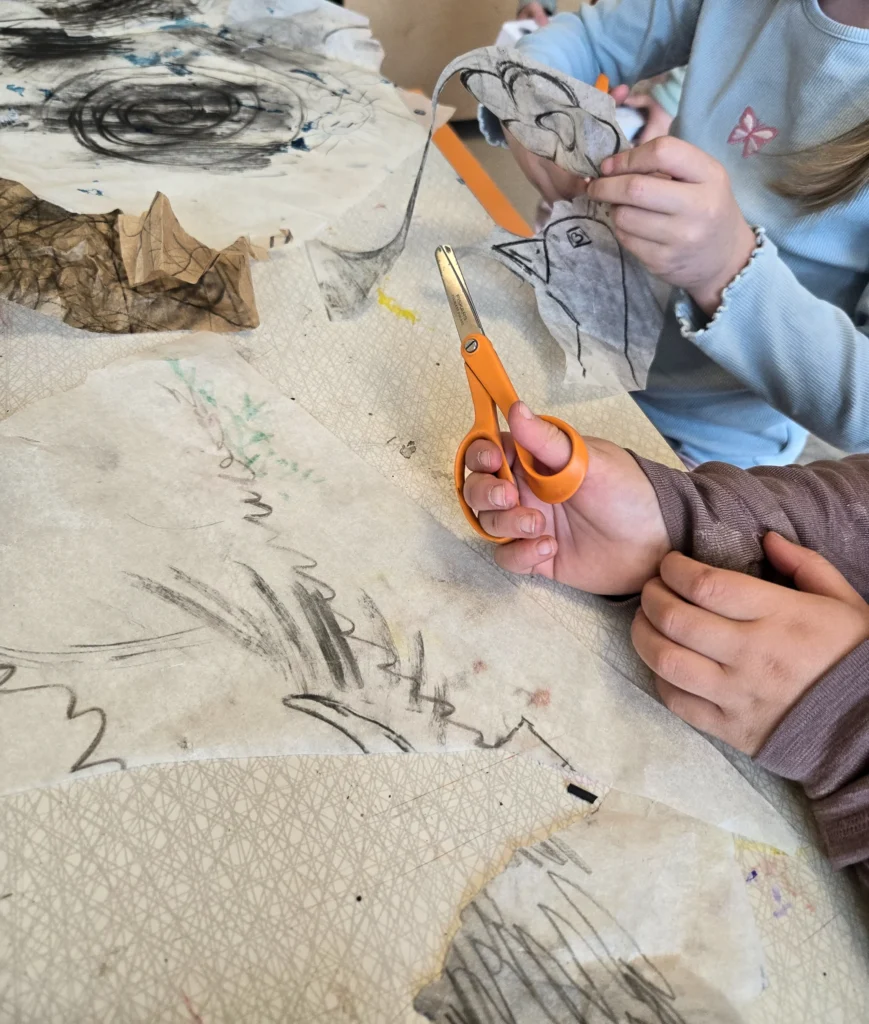
Annamária Zemková joined us at the kindergarten and we worked with charcoal and pencil on baking paper to draw houses, birds, trees and spontaneous doodles. These expressive drawings became part of the inner world of the installation, adding both texture and narrative.

Friday
Everything came together as we assembled the installation and held our soundscape recording session. The children created seagull sounds, shared small conversations and sang songs. I recorded each group, capturing a rich mix of voices, rhythms and playful expressions. Using plastic-free paint and paper attached to sticks, each child also made their own two-sided bird figure and played with it, bringing their characters to life.

The final installation functioned as a viewing box, a three-dimensional space that integrated the children’s work. From the outside, it resembled a simple birdhouse with small viewing holes. Inside, however, was a miniature, detailed and almost magical bird world constructed from twigs, drawings, paintings and small objects, illuminated with coloured light.

The soundscape added another layer, filling the space with the children’s voices, bird calls and shared expressions. Together, the audiovisual elements created a multisensory experience rooted in both observation and imagination.

Exhibition and celebration
Our work concluded with an exhibition at the Waldorf school, where all the pupils were invited to experience the installation. I took on the role of guide in the installation room and toastmaster for what we called a Seagull Welcoming Party, inspired by migratory birds’ returning celebrations. The project created a strong sense of shared purpose among the children. By working with sound, materials and storytelling, they developed not only knowledge about seabirds, but also a growing awareness of environmental phenomena. It became clear that even very young children can connect deeply with ecological themes when approached through sensory, creative and playful methods. For me, the project reaffirmed the importance of combining art, environment and community to create spaces where learning is not only informative, but also imaginative, embodied and shared.
All photos by Irini Kyrifidis Johnsen